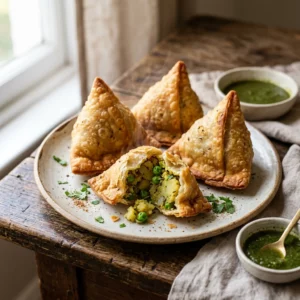
Crispy Potato & Pea Samosas Delight
This delicious crispy potato & pea samosas delight is a fantastic dish that's sure to impress. Made with potatoes, peas, and 1 tbsp any flavourless oil, it combines great flavors and textures for a memorable meal.
Ingredients
- 750g potatoes
- 100g peas, I use frozen
- 1 tbsp any flavourless oil
- 1 tsp whole cumin seeds
- 1 large onion, finely diced
- 3-4 hot green chillies, finely chopped
- 2 1/2 cm piece fresh ginger, peeled and grated
- 1 tsp ground turmeric
- 2 tsp amchur (dried mango powder)
- 2 tsp ground coriander seeds
- 2 tsp coarsely-ground fennel seeds
- 1 1/2 tsp salt
- 3 tbsp fresh coriander, finely chopped
- 500g plain flour
- 1 tsp ajwain
- 1 1/2 tsp salt
- 75ml any flavourless oil
- 170ml warm water
- 1.5 L flavourless oil, such as vegetable, sunflower or rapeseed oil
Instructions
- Boil the potatoes in plenty of water until tender. Drain and allow to cool completely. Once cool, peel the potatoes and roughly mash using a potato masher or the back of a fork. Set aside.
- Heat the oil in a large, non-stick pan. Add the cumin seeds and allow to sizzle briefly. Add the ginger, chillies, and onions. Sauté for 3-4 minutes, until translucent but not browned.
- Add the mashed potatoes, peas, turmeric, amchur, ground coriander seeds, ground fennel, and salt. Give the mixture a good stir to combine all the ingredients thoroughly. Cook for 2-3 minutes, stirring all the time, and then remove from the heat. Spread the mixture onto a plate and mix in the chopped coriander. Allow to cool completely.
- Place the flour in a large bowl and mix in the ajwain and salt. Make a well in the centre of the flour. Add the oil. Using your fingertips, begin to rub the flour and the oil together to create a fine, breadcrumb-like texture, as if you were making shortcrust pastry. Add the water and combine using your hands to create a rough, shaggy-looking dough.
- Knead for 10 minutes, until smooth. Cover with a damp tea towel and allow to rest for 30 minutes.
- Once rested, divide the dough into 9 tennis ball-sized rounds. Smooth into rounds between your palms and cover again with a damp tea towel to stop the pastry from drying out. Each round will make 2 samosas, for a total of 18 samosas. You can choose to make them larger or smaller by making fewer or more dough balls.
- Take one dough ball and dip each side in a small amount of flour. On a clean surface, roll it into an oblong, about 12cm wide (approx. 5-inches) and 18cm in length (approx. 7-inches). It doesn't have to be perfect.
- Cut each oblong in half, width-wise. You should be left with two semicircles.
- Take one of the semicircles and place it flat on the surface in front of you, straight side facing north. Roll it with your rolling pin a few times to make it a little thinner and taller. Take the upper left corner and bring it to the centre of the semicircle.
- Place some cool water down the middle and bring the upper right-hand corner of the semicircle to the centre to meet the waterline. Press both sides together very gently.
- Lift the samosa pastry up and open the pocket you just created. At the same time, press the seam together a little more to ensure it is well sealed. You should have a little pouch ready for filling.
- Stuff the samosa with the cooled potato and pea filling. I used about 2 tbsp of filling per samosa.
To create the little crease in the back of the samosa so it can stand up by itself: Along the open seam of the filled samosa, place your finger in the centre of the round edge of the pastry. Create a tiny fold, about 1cm wide, and pinch to seal (this will create a small dimple for the back base of the samosa).
- Now dab some cold water on the inner seams of the open edge of the pastry and press together and seal to close, pushing out any air as you go.
Repeat these steps for the remaining samosas. Ensure the dough portions are always covered to prevent drying out.
- Once all the samosas have been folded, allow them to air dry for 45 minutes, until the surface of the pastry feels rough and sandy to the touch. This is an important step to eliminate air bubbles in the pastry and to stop your samosas from getting a bubbly skin.
- Heat the oil in a large pan with deep sides or a wok until warm, not hot. You should be able to comfortably touch it with your finger. If you have a cooking thermometer, it will be around 120°C/250°F. Be careful not to heat it too hot as this will result in uneven cooking. You should be able to comfortably touch the oil with your finger prior to adding samosas to the pan. Be cautious not to heat it too much as this will result in uneven cooking. Simply allow it to cool down before adding the samosas.
- Cook the samosas in batches. I managed to get 7 in my large wok without it feeling overcrowded. Gradually increase the temperature, not letting it go above 150°C/300°F. Allow the samosas to cook over a medium-low heat for 25 minutes, until golden and crispy. If you feel they are browning too quickly, turn the heat down. Allow the oil to cool down in between frying the samosas in batches.
- Drain the samosas on a plate lined with absorbent kitchen paper.